
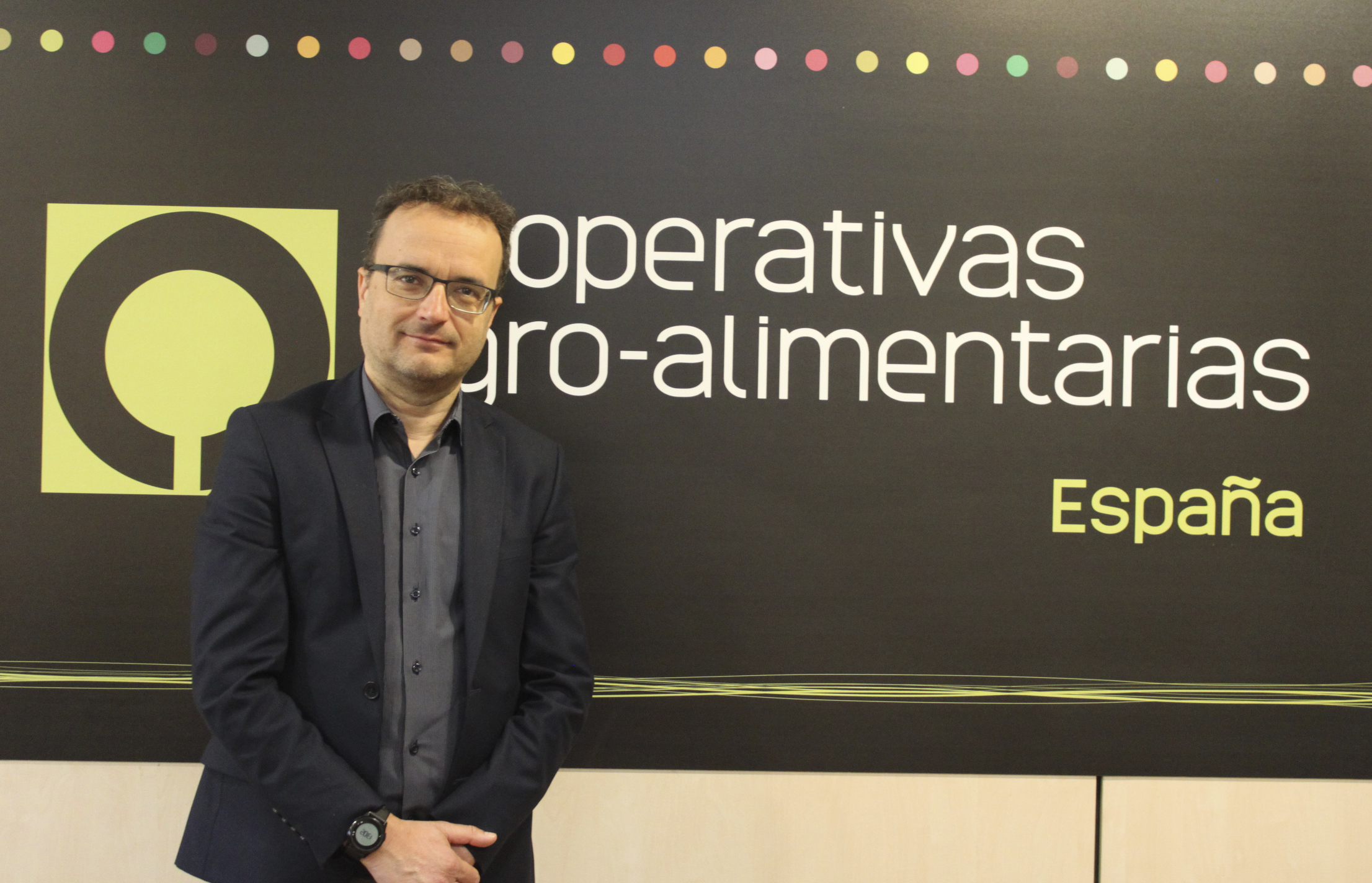
- Juan Corbalán, Director of the Brussels Office of Agri-Food Cooperatives of Spain, takes stock of the year since the publication of the Vision for Agriculture and Food in the EU.
It has been one year since the new European Commission — at the start of its 2025–2029 political mandate — published its Vision for the Future of Agriculture and Food in Europe. This document, presented on 19 February 2025, marked a clear political shift compared to the previous cycle and effectively replaced the much-criticised “Farm to Fork” Strategy.
Twelve months later, the balance calls for calm reflection. If anything has become clear, it is that agriculture has returned to the centre of the European stage. The Commission sent a clear message: agriculture is strategic and constitutes the backbone of a stronger European Union.
This may seem obvious, but it was not so during the previous mandate, when the agricultural sector — and particularly livestock farming — faced constant pressure from within the European Commission itself and from certain political groups, under the narrative that it was not sufficiently sustainable. There were even proposals to exclude livestock sectors from the European promotion policy, an initiative that was ultimately halted.
The Vision was structured around four objectives to achieve a sector that is: attractive; competitive and resilient; sustainable (economically, socially and environmentally); and fair. In one year, not everything has been accomplished — far from it — but significant steps have been taken.
The first objective directly addresses farm profitability and generational renewal. Brussels has acknowledged a fundamental truth: without decent incomes, there will be no young people in farming. For this reason, both the Generational Renewal Strategy and the Bioeconomy Strategy point in that direction — increasing farmers’ income from their activities.
Moreover, the establishment of the Food Chain Observatory and the publication, last December, of the evaluation report on the current EU Directive on Unfair Trading Practices have opened the debate on value distribution. In 2026, the Commission is preparing a revision of this directive, with major implications for farmers and their cooperatives, and a public consultation is already underway.
Other initiatives planned this year to implement this objective include the launch of a Platform on Women in Agriculture to promote their participation, and a European Observatory on Agricultural Land to address one of the main barriers faced by young people and women: access to land.
Special mention must be made of the livestock sector, which has suffered so many attacks in recent years. Today, the approach is radically different. In 2025, the Commission launched the Livestock Workstream, a discussion group involving the European sector and Member States to address sector challenges, and it is preparing a European Livestock Strategy for the second quarter of 2026. The message is now unequivocal: the sector is of crucial importance to the EU.
Regarding the second objective — competitiveness and resilience — the Commission considers that the third CAP Omnibus package (already in force) forms part of this effort. It has also published Omnibus packages on environmental legislation and on plant health and feed matters, including the amendment of the Regulation on the authorisation of plant protection products — an issue of crucial importance for Spanish agriculture and one that requires particular attention given the shortage of plant protection tools in the EU, which undermines agricultural productivity and profitability.
Within the competitiveness objective, special mention should be made of the initiatives on reciprocity, which represent a political shift compared to the previous European mandate, when this topic was virtually taboo within EU institutions. The Commission has announced increased border controls, a future working group on reciprocity, and a Regulation to ban imports of products exceeding residue limits for the most hazardous substances. Much remains to be done in this field, but the Commission has begun to act, bearing in mind that there are differing positions among Member States and organisations (including agricultural ones), some of which may see these initiatives as trade restrictions and therefore may not be very supportive.
Regarding the third objective — sustainability — the Commission considers it necessary to move from an obligation-based approach to one based on incentives, promoting market-oriented solutions. To this end, last year the Commission published the Water Resilience Strategy — a key issue for Spanish agriculture — the roadmap for carbon credits, which holds significant potential for farmers, and adopted the Carbon Removal Certification Regulation, aimed at promoting a system that remunerates farmers for their activities.
For 2026, the Commission intends to carry out an evaluation of the Nitrates Directive and to develop the so-called On-Farm Sustainability Compass — initiatives designed to help farmers assess and improve the sustainability of their agricultural holdings, providing a practical and guidance-based tool to measure their environmental, social and economic performance.
Finally, under the fourth objective — fairness — the Commission’s initiatives are based on the CAP reform proposed last year, which suggests that payments should be directed towards those — in the Commission’s view — who need them most: young people, women, small farmers and mixed farms, among others. In addition, in 2026 the Commission plans to publish European Strategies on Digitalisation and Innovation, as well as an Action Plan to promote European Protected Geographical Indications.
In short, it must be acknowledged that the Commission’s work over the past year in agricultural matters marks a turning point compared to the previous mandate. While differing opinions may exist, agriculture has clearly returned to the Commission’s strategic agenda. This shift cannot be understood without considering the broader context: war in Europe’s neighbourhood, global trade tensions, the climate crisis and massive farmers’ protests in several Member States, which conveyed the demands of those who work hard every day to guarantee high-quality food and keep rural areas alive.
The Commission has taken note. But now the change must be consolidated.
If agriculture is strategic, its policy must remain so
However, there is an important “but”. The proposal on the Multiannual Financial Framework breaks with the specific nature of the CAP, potentially diluting it within the broad array of actions that Member States may implement at all levels and, worse still, undermining the European approach that has always characterised the CAP — a concern also raised by the European Court of Auditors.
Beyond the Financial Framework and the CAP, there are three areas where concrete solutions are needed in 2026. The first is the food chain, where a very intense debate is expected in the context of the revision of the current European directive; the second is reciprocity in trade, where different interests converge; and the third is improving the availability of active substances to combat pests — an absolute priority for farmers, who expect European institutions to listen to them in the context of the SANTE Omnibus debate.
To be continued…